

 Facebook
 X
 Pinterest
 Copy Link
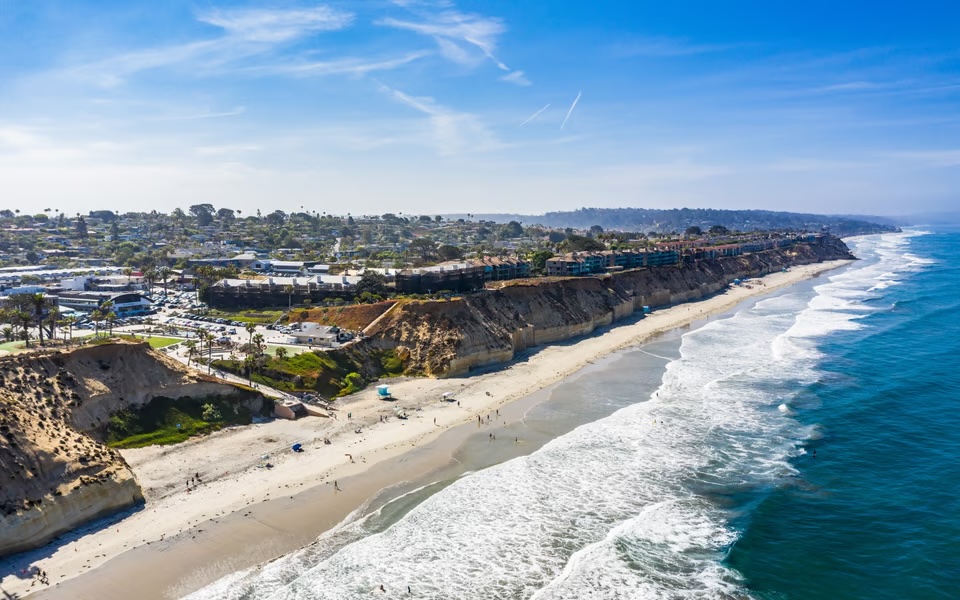
Picture a two-bedroom on South Sierra Avenue. Whitewater out every window, a staircase down to the sand, a price that looks fair next to the single-family homes a few blocks east. It’s easy to start choosing paint colors on the first visit. The board minutes are where the real story is, and most buyers don’t open them until escrow.
Here’s the short answer to the question I get most often: yes, an oceanfront condo in Solana Beach can be a smart buy, but the view is the easy part. On the bluff, you are also buying a share of a seawall, a 20-year permit cycle, a reserve fund and an insurance policy you didn’t pick. The listing sheet rarely shows any of that. The HOA packet does.
I’ve been helping people buy and sell along this coast since 2003, and the bluff-top condo is the one purchase where I spend more time reading than touring. In this post I’ll walk you through why these buildings are priced the way they are, what California law requires a seller to hand you, what Solana Beach condos are actually selling for right now, and how I structure an offer so you can back out cleanly if the paperwork says you should.
Why Solana Beach Bluff-Top Condos Are Priced Differently
A Solana Beach bluff-top condo is priced on two things at once: the view, and the long-term cost of keeping the bluff under the building stable. The second part is shared by every owner through the HOA, and it is the part buyers most often skip.
Solana Beach’s coastline is a line of sandstone bluffs, many of them protected at the base by seawalls. Most of the oceanfront condo buildings along Sierra Avenue sit right on that edge. When the wall needs work, the HOA pays for it, and the HOA is you.
The 20-year seawall permit and the fees attached to it
In Solana Beach, a seawall permit runs for 20 years, and getting one comes with a sand mitigation fee and a public recreation impact fee, according to The Coast News. That same report described how the California Coastal Commission’s changes roughly doubled the recreation fee on an average 2-by-50-foot seawall, from about $21,550 to $42,100. A bluff-top homeowners group, mostly condo owners, sued over it.
What that means for you as a buyer: the cost of shoreline protection is not a one-time event. It comes back on a schedule.
A real example: the Del Mar Beach Club repairs
Despite the name, the Del Mar Beach Club condominiums sit at 825 S. Sierra Ave. in Solana Beach. In January 2024, the Solana Beach City Council approved the HOA’s application for urgent repairs to 170 feet of seawall, phase one of a three-phase effort covering 540 feet, after a geotechnical review found the tiebacks “severely compromised,” The Coast News reported. The city put the sand mitigation fee at about $47,000 and the public recreation fee at just over $200,000, with Coastal Commission review still ahead.
I’m not singling out one building. I’m showing you the kind of line item that lands in board minutes long before it lands in your monthly dues.
Sand replenishment helps, but it doesn’t replace the wall
The U.S. Army Corps of Engineers placed about 700,000 cubic yards of sand along 7,200 feet of Solana Beach shoreline as part of the Encinitas-Solana Beach project, per the City of Solana Beach. It is a 50-year program, with Solana Beach scheduled for renourishment about every 10 years, according to SD Today. A wider beach slows erosion at the toe of the bluff. It does not retire a seawall or its permit.
The HOA Packet: What California Law Requires the Seller to Give You
California Civil Code Section 4525 requires a condo seller to give you the HOA’s governing documents, its most recent annual budget and reserve disclosures, a statement of current and approved future assessments, any defect information, and the most recent balcony and deck inspection report. That list is your roadmap. On the bluff, I read it in a specific order.
The statute’s full list, summarized by the HOA law firm Epsten, includes:
- The CC&Rs, bylaws and rules
- The most recent annual budget report and reserve disclosures
- A written statement of regular and special assessments, plus any approved increases not yet due
- Any initial list of construction defects, and later updates
- Rental or leasing restrictions
- Board minutes from the past 12 months, if you ask for them (always ask)
- The most recent inspection of exterior elevated elements under Civil Code 5551
Read the reserve funding summary like a forecast
Inside the annual budget report is the Assessment and Reserve Funding Disclosure Summary required by Civil Code 5570. It states whether reserves are projected to cover major repairs over the next 30 years, the percent funded, and any special assessments already approved, per Epsten’s summary of the statute. If reserves fall short, the form has to show the extra assessments that would be needed.
The first thing I check: is the seawall in the reserve study at all? Some associations treat it as a component. Others leave it out and plan to assess owners when the time comes. Neither is automatically wrong, but you need to know which one you’re buying into.
The balcony report matters more at the beach
California’s SB 326, now Civil Code 5551, requires condo associations to have a licensed engineer or architect inspect a sample of wood-supported balconies, decks and walkways more than six feet off the ground at least every nine years, per the statute text summarized by CommunityPay. The first round was due January 1, 2025.
Salt air is hard on waterproofing and steel. If the report flags repairs, ask whether they’re funded, scheduled or still being debated.
My three-document read
When a packet lands in my inbox, I go in this order:
- Board minutes (last 12 months). This is where bluff engineers, seawall bids and insurance renewals show up first.
- Reserve Funding Disclosure Summary. Percent funded, the 30-year outlook, and whether the seawall is a line item.
- Assessment statement. Any special assessment already approved, with its due dates.
If those three tell the same story, I relax. If the minutes describe a bluff problem the reserves don’t mention, we slow down.
What Solana Beach Condos Are Selling For Right Now
Solana Beach townhouse-condo sales are fewer this year but selling at higher prices: the year-to-date median through September 2026 was $1,656,250, up from $1,500,000 a year earlier, with 48 closed sales versus 65. That’s from the Greater San Diego Association of REALTORS’ MLS-based Local Market Update for ZIP 92075.
Single-family homes moved the other way. The detached median slipped 4.1% year to date while closed sales rose, which tells me buyers in Solana Beach are trading across both categories rather than standing still.
A note on sample size before you read too much into one month. Only four attached homes closed in Solana Beach in September 2026, so that month’s 26.1% jump in median price is a small-sample swing, not a trend. I lean on the year-to-date numbers, which cover nine months of sales. Also keep in mind these figures blend every attached home in 92075, from inland townhomes to oceanfront units, and medians don’t reflect seller credits.
The table below puts the two property types side by side so you can see what condo buyers are competing with.
| Solana Beach (ZIP 92075), MLS closed sales | Townhouse-condo, Jan–Sep 2025 | Townhouse-condo, Jan–Sep 2026 | Single-family, Jan–Sep 2025 | Single-family, Jan–Sep 2026 |
|---|---|---|---|---|
| Median sales price | $1,500,000 | $1,656,250 | $3,000,000 | $2,877,000 |
| Closed sales | 65 | 48 | 38 | 53 |
| Days on market until sale | 39 | 32 | 51 | 45 |
| % of original list price received | 95.8% | 97.2% | 96.3% | 96.5% |
| Inventory, end of September | 19 | 19 | 19 | 16 |
Source: Greater San Diego Association of REALTORS, Local Market Update, September 2026, Solana Beach 92075, data current as of October 5, 2026.
What I take from it: condo buyers here are paying close to asking, about 97 cents on the original list dollar, and homes are selling a week faster than last year. That’s a market where the buyer who has already read the HOA documents can write a confident offer while everyone else is still asking for them.
How I Structure an Offer on a Solana Beach Oceanfront Condo
The safest way to buy a bluff-top condo in Solana Beach is to get the HOA documents early, keep your contingency periods long enough to actually read them, and confirm the insurance and lending picture before you remove contingencies. Here’s the sequence I use with buyers.
Before you write
I ask the listing agent for the HOA packet, or at least the minutes and the reserve summary, before we write an offer. Many sellers already have them. If a building has had seawall work, I want to know which phase it’s in and whether owners have been assessed for it.
During escrow
- Give yourself real time. I negotiate a document review period that matches how thick the packet is, not the default.
- Call the management company. I ask three questions: Is any seawall or bluff work planned or permitted? Is a special assessment under discussion but not yet voted? When does the master insurance policy renew?
- Check the master policy. Insurance costs for California condo associations have been rising. Ask what the master policy covers, its deductible, and whether you’ll need a separate HO-6 policy to cover your share of that deductible.
- Loop in your lender early. Lenders review the HOA’s budget, reserves and insurance before approving a condo loan. A building in the middle of a large repair can slow that down, so we find out on day one, not day 20.
The judgment calls
Not every flag is a deal-breaker. A well-funded association that just finished a seawall phase may be in a stronger position than one that hasn’t touched its wall in decades. What I’m looking for is a board that sees the problem, has a plan, and is funding it. If the minutes, the reserves and the assessments all line up, you’re buying the view with your eyes open.
Frequently Asked Questions
Is it safe to buy a condo on the bluff in Solana Beach?
Many owners have lived on the Solana Beach bluffs for decades, but safety and cost depend on the specific building. Read the HOA’s recent geotechnical reports, board minutes and seawall permit history, and have a qualified professional explain anything you don’t understand. I always recommend asking the HOA directly about planned bluff or seawall work.
What HOA documents should I get before buying a condo in California?
Under Civil Code 4525, the seller must provide the governing documents, the most recent budget and reserve disclosures, a statement of current and approved future assessments, any defect information and the latest balcony inspection report. Ask for the last 12 months of board minutes too, since the law requires them only on request.
How much does a condo cost in Solana Beach in 2026?
The median sales price for Solana Beach townhouse-condos was $1,656,250 year to date through September 2026, according to the Greater San Diego Association of REALTORS. Oceanfront units typically sit well above a citywide median that also includes inland townhomes.
What is a seawall special assessment?
It’s a one-time charge an HOA levies on owners to pay for seawall or bluff repairs that reserves don’t fully cover. In Solana Beach, seawall projects can also carry city mitigation and recreation fees. Check the assessment statement and reserve summary to see whether one is approved or likely.
Does sand replenishment protect Solana Beach condos?
A wider beach helps slow erosion at the base of the bluffs, and Solana Beach is on a 50-year Army Corps program with renourishment about every 10 years. It complements seawalls rather than replacing them, so it doesn’t remove an HOA’s responsibility to maintain its wall.
Ready to Look at the Bluff With Clear Eyes?
Buying an oceanfront condo in Solana Beach is one of the most rewarding moves on this coast when you go in knowing what you’re paying for, and one of the most frustrating when you find out in escrow. My job is to help you read past the view to the paperwork, ask the questions that matter, and write an offer that protects you if the answers aren’t what you hoped. If you’re weighing a specific building, or you just want to talk through which Solana Beach condos fit your plans and budget, I’d love to help. Reach out on my contact page or call me at 760.445.0058, and let’s look at the HOA packet together before you fall for the whitewater.
Other Resources
External Authority Resources
- Greater San Diego Association of REALTORS: Solana Beach 92075 Local Market Update (September 2026)
- City of Solana Beach: Encinitas-Solana Beach Sand Replenishment Project completion
- The Coast News: Solana Beach seawall in need of emergency repairs
- Epsten: Civil Code 4525 disclosure documents for prospective purchasers
